우리 팀과 연결하십시오
우리 팀과 연결하십시오
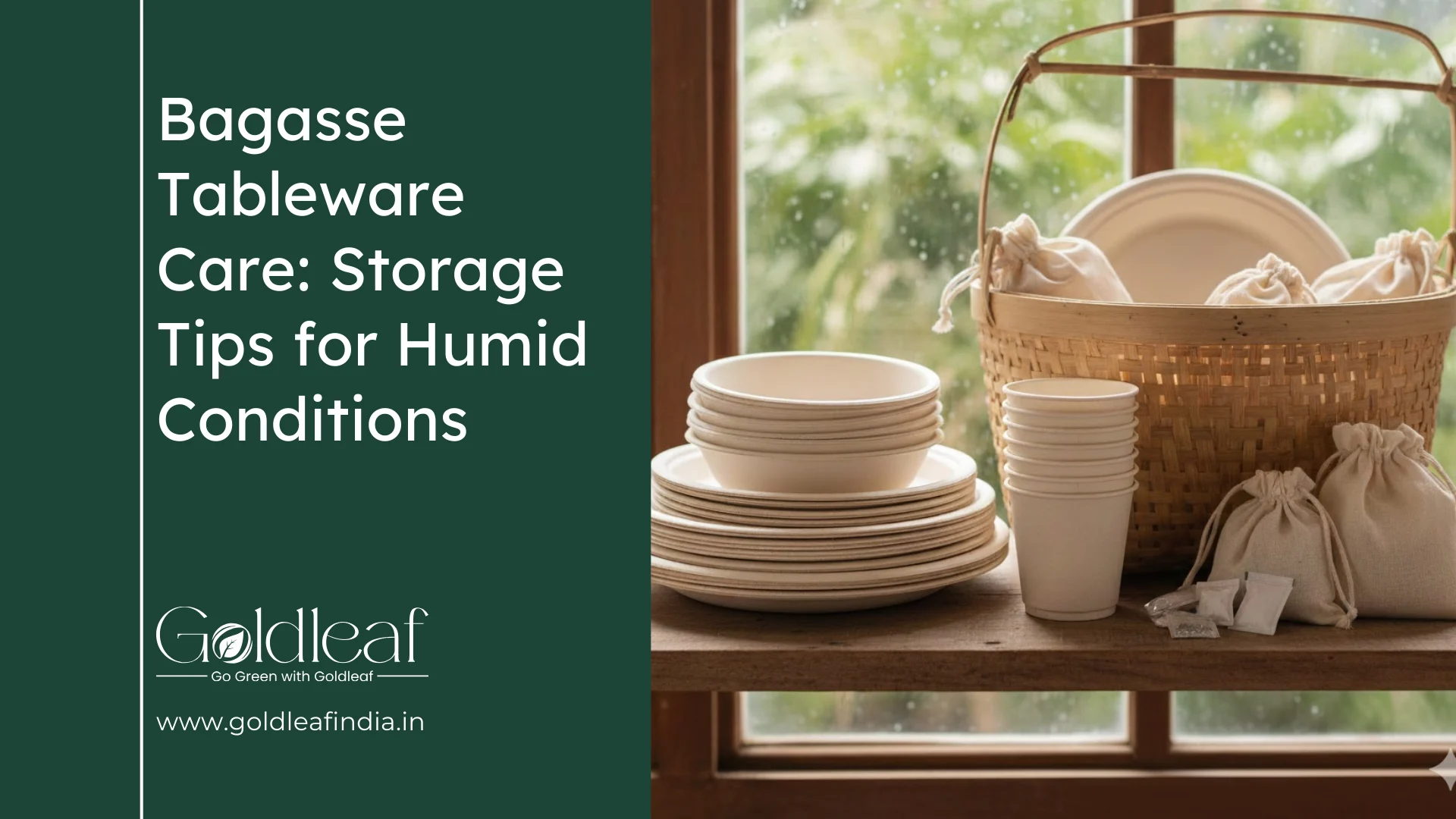
Eco-conscious businesses across the globe are rapidly switching to bagasse tableware a sustainable and biodegradable alternative to plastic disposables. From cafes and caterers to hospitals and corporate canteens, this shift is transforming how the food industry serves meals responsibly.
However, in countries like India, where humid conditions prevail for most of the year, moisture can pose a significant challenge. Improper storage may cause bagasse plates, bowls, and cups to lose their shape, strength, and hygiene reducing their shelf life and usability.
The good news is that with proper handling and storage practices, bagasse products can stay sturdy, clean, and safe for months without compromising quality.
At Goldleaf India, we take pride in being a trusted manufacturer of high-quality bagasse tableware and sugarcane bagasse plates, designed to perform even in tropical and humid environments. Through this guide, we’ll explore practical tips to help businesses maintain their bagasse products in perfect condition all while staying committed to sustainability.
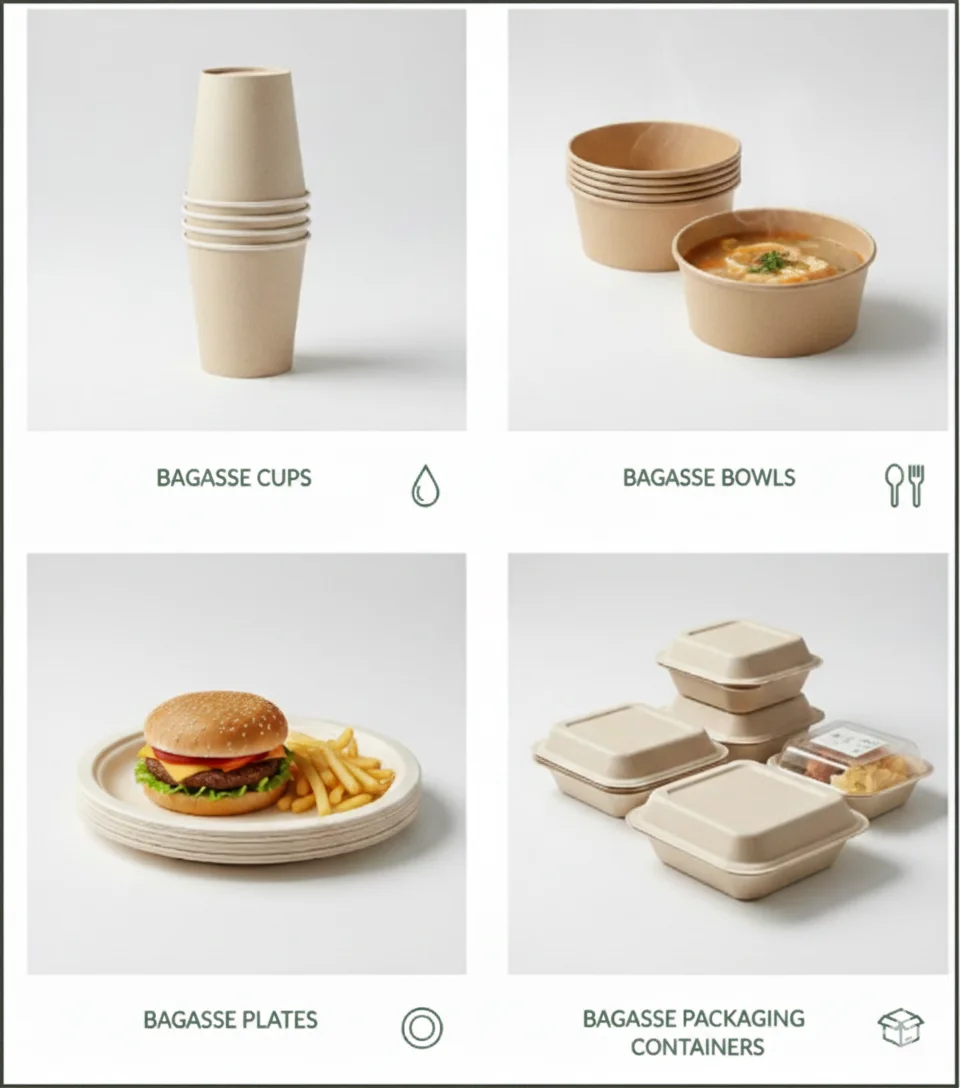
Bagasse tableware is made from sugarcane pulp, an agricultural byproduct that’s both renewable and biodegradable. This makes it one of the most sustainable alternatives to plastic and Styrofoam disposables.
However, its biodegradable nature also means it is naturally sensitive to moisture. In areas with high humidity, bagasse can absorb water vapor from the air, leading to softening, warping, or early decomposition if not stored correctly.
By following proper storage practices, you can ensure your bagasse tableware remains hygienic, sturdy, and safe for long-term use.
Naturally compostable, but sensitive to excess moisture
Can deform or lose rigidity in damp storage
Needs air circulation and temperature control for longevity
Humidity refers to the level of moisture present in the air, typically measured as relative humidity (RH). When RH exceeds 60%, it’s considered humid conditions common in Indian coastal and monsoon climates.
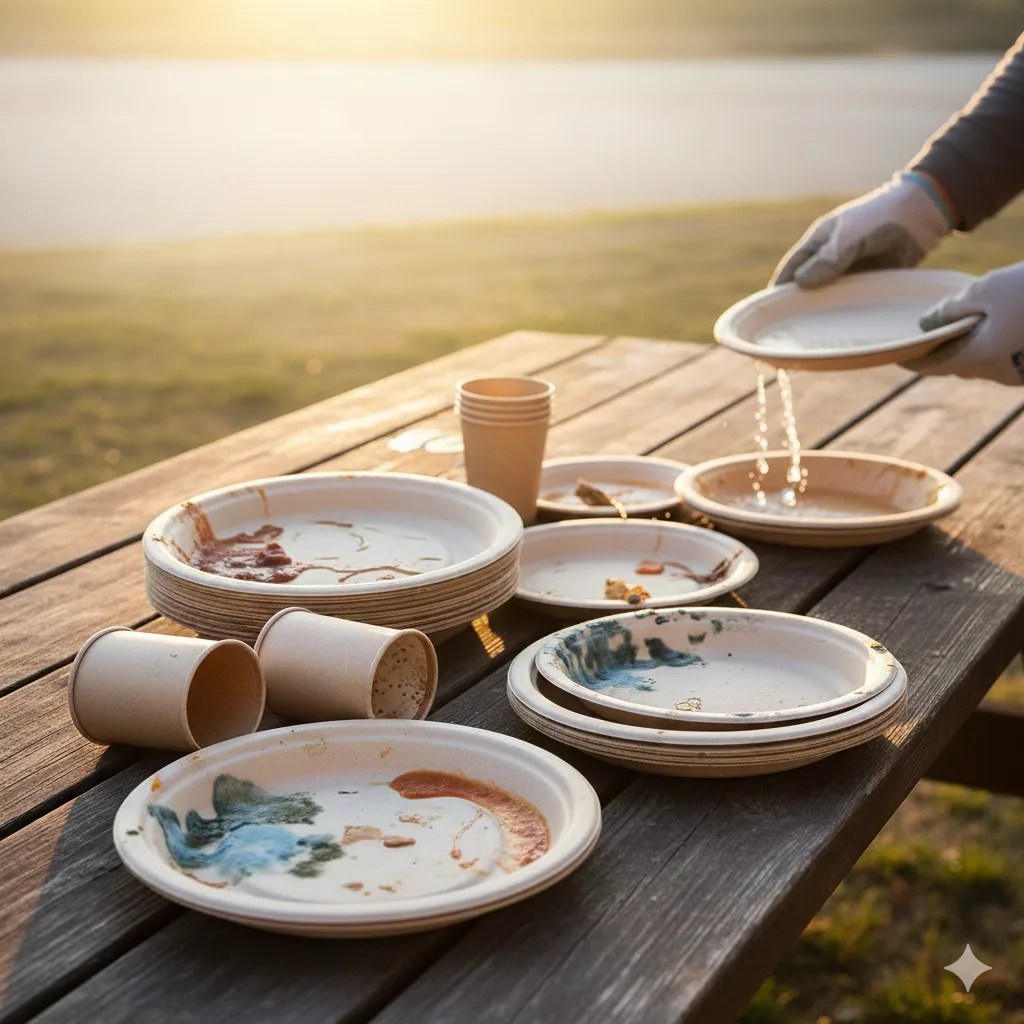
High humidity impacts biodegradable plates and eco friendly plates made from bagasse by weakening their structure. The cellulose fibers that give them rigidity start absorbing moisture, which can lead to:
Softening and warping
Fungal or mildew growth
Discoloration or musty odor
This is especially critical for bagasse packaging, cups, and bowls, which can lose their strength when exposed to humid storage environments. For caterers, retailers, and warehouses, climate-controlled storage becomes essential to maintain quality and hygiene.
|
Condition |
Impact on Bagasse Tableware |
Preventive Measure |
|
High humidity |
Warping or softening |
Store in ventilated, dry spaces |
|
Direct sunlight |
Brittleness or discoloration |
Keep in shade |
|
Poor ventilation |
Mold or odor |
Use silica gel or dehumidifiers |
Humidity doesn’t just make the air sticky it affects your tableware’s lifespan and usability. Below are common issues faced by businesses storing bagasse plates and bagasse packaging in such environments:
Fibers in the tableware absorb moisture from the air.
Plates and bowls become soft and fragile.
Loss of structural integrity leads to deformation.
Occurs when humidity exceeds 70% and ventilation is poor.
Symptoms include discoloration, musty odor, or visible black spots.
Mold poses hygiene risks, especially for food-related use.
Plates lose shape when stacked under pressure in humid areas.
Edges curl or crack, reducing usability.
High humidity accelerates biodegradation before the product is used.
Shelf life can drop by several months.
Cardboard boxes absorb moisture, weakening protection.
Reduced barrier effectiveness increases product wastage.
Bagasse products can absorb 15–20% moisture at 70%+ relative humidity.
Mold can develop within 24–48 hours without proper storage.
Proper storage reduces waste by 80–90%, saving both costs and materials.
Store upright to maintain shape
Avoid stacking under heavy loads
Use paper liners when stacking in bulk
Store in airtight cartons to avoid moisture intrusion
Store horizontally; avoid pressure stacking
Ensure they are fully dry before use, especially for hot meals
Store with lids open during long periods to prevent odors
Avoid tight plastic wrapping; allow airflow
Humidity reaches 80-90% in coastal regions
Check storage twice daily
Deploy extra dehumidifiers
Reduce inventory during peak monsoon
Use vapor barriers on all pallets
Order smaller, frequent shipments
High temperature + moderate humidity
Risk of condensation in AC spaces
Maintain stable temperature
Keep away from AC vents
Monitor moisture buildup
Generally favorable conditions
Standard precautions sufficient
Good time for bulk ordering
The shelf life of bagasse tableware depends on climate and storage conditions.
In dry, moderate climates: 12–18 months shelf life
In humid environments: 8–12 months if not properly maintained
With controlled humidity and ventilation: Up to 18 months even in tropical regions
Pro Tip: Keep humidity below 60% and temperature between 20–28°C for maximum durability.
At Goldleaf India, we manufacture bagasse tableware and bagasse products specifically engineered to withstand India's diverse climate conditions. Our advanced manufacturing process incorporates high-pressure molding that creates denser fiber structures with reduced porosity, minimizing moisture absorption. Food-grade coating applications provide additional moisture barriers without affecting biodegradability.
Our finished products contain less than 5% moisture content significantly below the 8-10% industry average allowing greater moisture absorption capacity before structural integrity is compromised. We conduct rigorous testing under controlled humidity conditions and maintain ISO certification and FDA approval for food contact safety.
Our Commitment:
Tested for moisture absorption and shelf stability
Hygienic, export-quality packaging
Available in various forms plates, cups, bowls, trays, clamshells
100% compostable and safe for food contact
Yes, if stored improperly. High humidity can cause softening or mold growth, but proper ventilation and dry conditions prevent this.
Keep them in sealed boxes, use dehumidifiers or silica gel packs, and store above floor level.
Up to 18 months in dry conditions, around 12 months in humid climates with basic care.
Absolutely. As long as they are kept dry and free from odor, they remain safe for serving hot meals.
Yes. Goldleaf India uses export-grade, moisture-resistant packaging designed to protect products during transit and long-term storage.
Proper care and storage ensure that your bagasse tableware stays durable, hygienic, and ready to use even in humid conditions. With simple steps like dry storage, sealed packaging, temperature control, and regular monitoring, you can extend the shelf life of your eco-friendly plates and other bagasse products significantly.
At Goldleaf India, we manufacture a wide range of bagasse products from plates, bowls, and cups to customized bagasse packaging designed for strength, sustainability, and performance in all climates, especially India's humid tropical conditions. Our engineering specifically accounts for moisture resistance while maintaining 100% biodegradability.
We don't just supply products we partner with you for success. Our technical support team provides storage consultation, troubleshooting assistance, and ongoing guidance to ensure your tableware performs flawlessly from our facility to your customers' tables.
Choose Goldleaf India because caring for your tableware means caring for the planet. Contact us today to discuss your specific needs, request product samples, or learn more about our moisture-resistant manufacturing techniques designed specifically for Indian climate conditions.


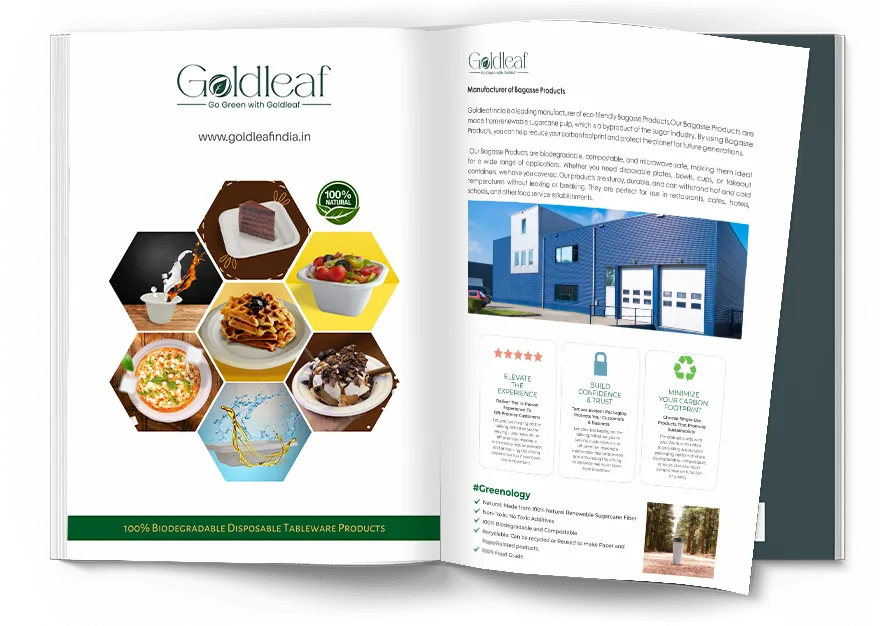
Goldleaf India 친환경 바가스 제품의 주요 제조업체입니다. 우리의 바가스 제품은 설탕 산업의 부산물 인 재생 가능한 사탕 수수 펄프로 만들어졌습니다..
© 2024 , Goldleaf ,
모든 권리 보유.
Made & Managed by Lightlink Solutions
